Just to clarify, since this article just talks about smartwatches in general: The issue are watches that allow someone to remotely listen in, not all variations of smart watches for kids. They are banned for that ability, not for general concerns about IoT security.
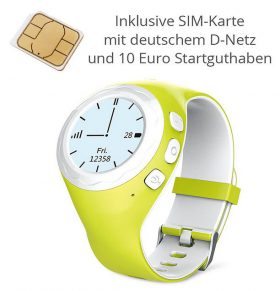
Hidden listening devices (devices with listening capability that are disguised as other harmless items) are illegal to possess or sell in Germany under existing law. The regulatory agency for this just made a press release pointing out this specific device category and that they have taken action against sellers.
This should include all smart phones with children's games installed on them too.
My niece asked me to install some games on an old smartphone I let her play with. Out of about 15 I looked at, 15 asked for access to one or more of the camera, microphone, address book, location or just blanket ask for every permission under the sun. None of them needed these permissions for the actual game play of course.
How does Google find this kind of spying on children acceptable?
Why apps ask for blanket permissions: have you ever tried using a cordova library? My own app has to ask for storage access just to get reliable sound output...
The deeper answer is that economic incentives don't encourage minimal permissions, even if there's no malicious intent.
And android and google is negligent for not allowing users to limit apps ability to use these apis.
An app can request it, I'd like to say NO in a way that doesn't break the app. It asks for camera, fine it gets the same stock photo. It asks for location, it gets the Galapagos. It asks for microphone, it gets "Never Gonna Give You Up". Installing an app shouldn't be a binary (hah) choice.
But you can do that on Android now. On Android 7.0 (might even work on 6.0), go into Settings -> Apps, tap on an App and then tap on Permissions. You can then enable or disable individual permissions for that app (eg enable camera but disable microphone)
Android apps now request permission at the time they need to use a feature, not on first install. They've basically adopted the same permissions model as Apple.
This is not what he described. Removing any of these permissions must be handled by the app. The app shouldn't even know I removed a permission. It should just get empty or fake data.
This is a denial of service attack against the user, at most should be an innocuous overlay that alerts the user when an application using a privacy reducing api when that user has it disallowed.
The app should never know the user declined usage of an API. When any app uses a privacy reducing API, the user should be able to know when that occurs. Microphone, location, etc, should be a small overlay like maybe the battery indicator icon where they can know when the app would have violated their privacy.
Yeah but the first time, the user has to decide whether he wants to allow or disallow. It's system dialog, the app can't interfere with it in any way. The icon you want is then shown in the notification area.
FLO software shifts the balance of power between users and developers, since (1) it's harder to sneak a "feature" in without people finding out, (2) if a developer makes a change that people don't like, it's much easier for people to continue using the old version, and (3) there is potentially more competition between developers, since they can start from a fork of the project instead of a clean slate.
As that applies to the specific example in your comment, (1) people can verify whether or not a piece of open source software is listening and phoning home, (2) if it is spyware, a different programmer could make a fork and remove this antifeature, and (3) if they published the fork, now end users have the choice of using a version that does not track you.
Does this mean Open Source software never tracks you? Of course not. But it is much more resistant to this sort of thing.
Nobody reads source code (hell they don’t even read the permissions and those are a lot easier to understand); the de-spied clone couldn’t use the same name, couldn’t necessarily communicate with the same servers, and wouldn’t get near as much exposure.
The practical impact of such a change, even if it were forced top down by Google, is nil. Nobody outside a tiny minority of geeks treats free software as a selling point.
In theory you could automate the process of removing unwanted permissions in another app store. For example, if some game on the google app store wants the camera but doesn't need it, a "safe app store" could download its code and remove the camera permissions and any potential calls to functions which read from the camera. (They could be replaced with blank stubs or even a fake video like a rickroll). Same principle for address book (just provide fake/randomly generated people, etc).
Obviously not everyone would use the safe version because of the network effect of Google's play store. But for anyone who becomes aware of the "safe app store" and is aware of privacy risks, they'll almost certainly chose to download their apps from there.
Afaik, some of this is possible on a rooted android phone: it is possible, for example, to cut off an application from real GPS data, and instead feed it fake data.
You've already lost most users at "rooted" though. It also requires that someone has done the legwork to root a specific model, and it's always a moving target with new phone models which try new ways to prevent you rooting (or voiding your warranty). The majority of manufacturers are unhelpful when it comes to giving you more control over your phone.
All the more reason that things should be free software with anti-tivoization, so that the stock ROM on phones can be replaced easily. Most of android is free, but because it allows non-free parts (drivers, etc), it's a complete mess for people to tinker with devices because the method is different for every model.
You shouldn't really need root to selectively enable permissions for some apps either. The "all or nothing" approach to permissions is a poor design choice.
> The practical impact of such a change ... is nil.
I don't believe that. I think there would likely be a small group of people that would audit the software to create fact finding reports and others may create patches to fix software. Of course this is still subject to abuse, but there would probably reputations for certain sources.
Similar to journalism. There are a lot of first hand sources out there but the average layman does not read them. They would rather read a summary/interpretation of the facts. This is also subject to abuse. Reputation is important.
I don’t think end users would be the ones doing the code review. Making source auditable by “a tiny minority of geeks” would be a net positive, increasing the chance that someone (bug bounty hunter, appsec blogger, etc) would find and report on malicious apps. It would be no silver bullet, but more transparency would be no bad thing.
Doesn't really help unless you build the software yourself, though, and even then only after you've audited the source. And, if we're going down that rabbit hole, with a compiler you've compiled yourself after auditing the source. Using a compiler you... well, you get the point.
It has little to do with the software and everything to do with distribution. Users cannot install software on their devices. You eat the food given or you starve.
While in absolute terms it's not any more ok to spy on adults than children, the idea of spying on children being more morally repugnant is based around the idea of children as innocent and by spying on then we're depriving them of that and allowing malicious actors to prey on that innocence (hey, now someone knows where this child will be, when, and most of the important things happening in their life; much easier to trick.)
In reality the same arguments apply to adults, but we find it less morally repugnant because adults aren't innocent and are expected to gaurd themselves against such actions. However, it becomes more and more difficult to guard against.
> While in absolute terms it's not any more ok to spy on adults than children, the idea of spying on children being more morally repugnant is based around the idea of children as innocent and by spying on then we're depriving them of that and allowing malicious actors to prey on that innocence (hey, now someone knows where this child will be, when, and most of the important things happening in their life; much easier to trick.)
This seems like a very mushy reason. I'm pretty sure the real reason is that children are not considered able to knowingly consent to many things - including contracts such as EULAs or TOS. Given this, a child is also not expected to be able make a reasoned decision about privacy tradeoffs.
The reason it's "ok" to spy on adults is that they can make an educated decision about whether they're ok with being spied on. I don't necessarily agree that this is true in practice, but I think that's the theory.
I think it does elicit the feeling of disgust, but most people don't know it's happening. (Or downplay the risks - such claiming that it's only machines and not people watching).
It should also be completely illegal, but the justice system can't keep up with technology. Imagine you found out that your next door neighbor has drilled a hole through the wall and fed a camera into your house - what do you do? (Call the police, certainly). Is it really any different when the camera feed isn't a physical wire but done over the internet?
Because with kids it's much more obviously evil thing to do. For adults one can perhaps argue that they (being adults) can choose for themselves whether to give or not to give the permissions - just like with everything else in their life, it's their responsibility to know better. Kids can't really be expected to make informed decisions on actions that are potentially dangerous, they need to be protected by adults.
> For adults one can perhaps argue that they (being adults) can choose for themselves whether to give or not to give the permissions
That's wishful thinking. Most people can't tell the WWW from Facebook. People are so bad at writing emails that there are Workshops for Composing E-Mails which sell out quickly. Many disable SIM PINs because they forget them or don't want to bother remembering them. The people who read permissions an app requests make such a little percentage of smartphone users that they can't even be considered a minority.
I beleive we need some kind of CE for software. It's easier to make sure that your parmigiano reggiano comes from Emilia-Romagna that it is to make sure that you can rely on a certain online service provider / platform. That's simply unacceptable.
And they'd rather not care. A life where we had to make sure every single thing we have and every tiny peg or thing in them is of a certain quality would be hell. Have you read "I, pencil"? I suggest it becomes compulsory reading to every single person. Things involve lots of other things and all we have is some governmental and international bodies helping us have some trust in what we possess.
We generally believe that sexual exploitation of children is worse than of an adult. We don’t allow for consensual sexual relations, creation or mere posesion of explicit material with a child.
In fact drawings of said material can get you in a lot of trouble in many, liberal, countries.
That being said, I hate what the internet has become.
Maybe a bit off topic, but for an entertaining and chilling way to understand why Germans are so opposed to listening devices, watch _Das Leben der Anderen_ (The Lives of Others).
Not merely microphones though, but also privacy at a whole.
The other reason is the WWII history.
Das Leben der Anderen is a very good movie with a sublime cast (including Sebastian Koch), but hardly entertaining. A somewhat entertaining movie about the GDR (DDR) is Goodbye Lenin [1], starring Daniel Brühl (Bruehl). Both movies are primary dramatic though.
I can also recommend any movie starring Jürgen Vogel [2] (Juergen). The subjects movies he's in touches upon are often thought-provoking. Although also, usually drama. I can highly recommend German cinema, I hold the authenticity of German cinema in high regard.
I'm curious about your use of the word "entertaining"...
Do you mean to exclude dramas, tragedies, or things that deal with serious subject matter? Or do you mean to say that Das Leben der Anderen isn't a good movie?
Sort of. Entertainment is a classification taking into account purpose (Films are a form of entertaining one's self/time). Entertaining is to do with how one emotionally processes something.
The best distinction is the one represented in Collin's English Dictionary:
  entertainment (ˌɛntəˈteɪnmənt) n.
  1. the act or art of entertaining or state of being entertained
  2. an act, production, etc, that entertains; diversion; amusement
versus
  entertaining (ˌɛntəˈteɪnɪŋ) adj.
  1. serving to entertain or give pleasure; diverting; amusing
That's why Germans should be opposed to listening devices.
The fact is, the vast majority is perfectly happy using stuff like android phones or amazon's echo.
Both an amazon echo and an android phone require a key phrase to activate. It’s obviously possible that they could be used by amazon/google to listen in, but neither is a covert device that you can use to listen in on me, something that these smart watches enable.
"Both an amazon echo and an android phone require a key phrase to activate."
But thanks to the devices closed nature, their manufacturers have the exclusive ability to remotely modify their workings so that the device could listen without the "owner" consent. This assuming it hasn't already been done and a single packet hidden into an update push can trigger undetectable monitoring. Technically it would be trivial to implement and trivial to turn off with another update so that it would remain undetectable in case of device hardware/firmware/software inspection.
"Could be used by a determined person with the necessary skills" and "is intended for and market to consumers as" is not the same thing even though there might not be a technological difference.
This still is not their primary purpose. And yes, illegal acts could turn them into an illegal covert listening device, but that would be illegal, wouldn’t it?
Yes, the MBPs got that fancy light. The TP can point the camera to the back tho (which could be worse). I covered all 3 with tape. Both 3 have that option. Only the TP has a killswitch for radios though. And it doesn't seem Apple is very fond of killswitches for radios, given their utter lack of expected functionality in iOS 11.
That's little comfort if an attacker can access the camera without the LED turning on. You can never be sure which is why integrated cameras and microphones get ripped out of devices used in sensitive areas.
Bullshit. They're already "activated" if they can hear the key phrase in the first place.
In only the absolute best case, the always-on microphone is backed by a local-only module that picks up the keyphrase, and sends only subsequent communications to the cloud.
We can argue about the definition of covert, but Amazon Echo does allow others to somewhat sneakily listen in on you:
>When you drop in on your device or a contact's device, the light ring on your Echo pulses green, you connect automatically and can hear anything within range of the device
Like I said, we can argue over "covert." But once you allow a contact to drop in on you, they can do it at any time, with no prior warning, and you won't know it until they're already listening to you.
More importantly, requiring a software upgrade to enable that functionality would make it obvious that this is indeed of questionable legality and limit the market. Many people buying these watches (or the children dolls affected by the last round of bans) are not aware that these are in fact hidden spying devices.
Technically its not a ban of specific merchandise, since they were already illegal. Its more like, say, a police raid against an arms dealer (=> thats not an arms ban).
I'm not suggesting a first party would do it, but say a platform akin to Pebble, Apple Watch or Android Wear were to enable an app like that to be developed. What part would be illegal then - the device itself? The app? The app store? Restricting this seems somewhere between asinine and impossible.
German law prohibits "transmitting equipment which, by its form, purports to be another object or is disguised under an object of daily use and, due to such circumstances, is particularly suitable and intended for intercepting the non-publicly spoken words of another person without their detection" (§ 90 TKG). This was the basis for this statement by the regulator and explains why it was not restricted to certain uses. It was not based on insecurity of those devices. Even if they were perfectly secure that would not change anything.
Phones are not disguising as a device that doesn't capture sound, people are considered aware that phones can communicate. A phone with a special "spy mode" in which it looks like it is turned off but actually is working like one of these watches might trigger the law, since a person seeing it turned off could have a reasonable expectation of not being captured.
You hiding a phone isn't the fault of the product type, and thus only your actions might be illegal, not phones themselves.
The intended purpose of mobile phones is not to spy on unsuspecting bystanders. Phones are even explicitly mentioned in the official justification by the parliament when they enacted that law.
The law in its current form was passed in 2012 and was specifically restricted to devices that have the purpose of spying. We can safely assume that the lawmakers were aware of current technology.
Certainly not everybody. This law was last changed as a part of a large telecommunication bill. The proceedings show that they are aware that technology can move very fast (thus the law needs to be written as open as possible) and it's hard to precisely differentiate between e.g. phones (or new form of legitimate technology) and dedicated spying devices (thus the law needs to be written as specific as possible). Given those goals I think they made a pretty good job.
You're saying nobody in Germany uses "ok google" or "hey siri" hotwords? What constitutes an "active microphone"? Is it only when audio data is being recorded or streamed, or is it the mere act of processing audio with any type of software? What if the software is malicious, running in the background and not indicating it's actively recording/streaming/processing all the time?
I'm asking this mostly rhetorically, but just trying to point out that when most things these day are controlled by software that is remotely and automatically updated and installed (including firmware, baseband software, and background apps), it's nearly impossible to say something like "yes, this device has a microphone, but it's not 'listening' right now", let alone define it legally.
At the same time, nobody with a smartphone actually knows whether or not they're carrying an active microphone around or who could be listening to what's being recorded.
The purpose of the "Hey Siri" and "Okay, Google" functionality is to listen to those specific phrases. It is not intended to be used to covertly record people and can not be used by a regular consumer to do so. The law does not concern itself with technicalities such as what constitutes an "active microphone". What matters is intent. That's a pretty easy question to answer for those watches. This functionality is literally a bullet-point in their ads.
And yet we've seen similar technology in other products, like Samsung TVs, being used to gather huge amounts of information for the U.S. government. From a security standpoint, understanding the capabilities is really all that's relevant. If it's possible that it could be used in that way, then it probably can't be trusted not to be used in that way. Especially since these devices receive OTA updates and there are a number of ways to attack them on a relatively large scale by doing things like spoofing a cell tower.
If the concern is individuals using their own devices intentionally for spying purposes...that's relatively easy for a non-technical person to do with a smartphone if they want to.
It's pretty well known though in this day and age that smart watches can have recording capabilities, so if the problem is that "a watch looks like something that can't record" all smart watches should be banned by that logic.
I don't feel like that actually applies here, but if it does it should also apply to the entire smartwatch category.
The devices this is about allow to listen in remotely. I am pretty sure that even many of the wearers (children) don't know that. At least some of those devices don't look like a smartwatch on first glance either, e.g. http://www.eltern-zeit.de/wp-content/uploads/lokato-kidswatc...
> It's pretty well known though in this day and age that smart watches can have recording capabilities
This isn't true for hybrid smartwatches and fitness trackers. Those devices don't have listening devices and require tethered cell phones for internet communication, which already enables GPS tracking. It'll be interesting to see if this has been written in such a way as to exclude those or lump them in with the devices being targeted.
German laws are written in German and any translation is bound to miss many important subtleties (even a layperson's reading of the original is going to miss something). I found this translation last time this topic came up here (it was teddy bears with spy cams then). Honestly it's not really good, especially when debating finer details as happens downthread. At least it conveys the basic gist of it.
There are "official" translations of some laws, but not all of them. In any case they're always only meant as a convenience, the German version obviously being the only source of truth.
In this case the sentence is taken from the english version of their press release regarding the cayla dolls:
This may be an unpopular opinion, but I agree with the decision. Perhaps this will push the producers of such devices to up their privacy game, and in the future there should be security audits before allowing them back on the market. Regulation of production would be more difficult and more liable to error than if a producer were forced to prove itself reliable and trustworthy before being allowed to sell products to children.
For me as well this is an issue of high concern. Many parents blindly put faith in technology in their children's hands (especially in this case, where the smartwatches are marketed as a safety feature), but this may now encourage parents to be more mindful as to such decisions. In our society, we have a ravenous competition for who can grab children's attention and keep it. Perhaps if the competitors are willing to prove they have products that will actually improve a child's well-being, this game wouldn't be as odd as it seems to me now.
edit: I see now that this is only a ban on smartwatches with recording/audio capability. This makes my point somewhat irrelevant.
That is also a good option. GPS trackers on children do not solve any inherent problem. Teach the child how to be responsible, allow the child to prove themselves responsible and trustworthy, and there is little to worry about.
Apart from the privacy issues: my niece got a “smartwatch” recently at the age of 5 with many games installed on it. She was instantly addicted to it. After she was nearly ran over by a car because she looked at the thing instead of left/right at a street her parents got rid of that thing. They said it was straight out of hell...
Speaking as someone of similar mind, but who has children, it's rather challenging to accomplish when your child's friends and peers are all equipped with such devices _and_ the teachers assume that they are available. It's hard enough on your children to be the odd one out, it's harder still when the teachers are assuming that students are equipped with immediate access to the internet and productivity software.
I wonder what the future is going to look like when analog methods of communication have been eschewed for several generations. Imagine how vulnerable we will be to a massive Carrington event when most of the population is barely capable of (or incapable of) multiplication and division. Antique solar-powered calculators will be back in vogue!
I also spoke as a parent of a child (6yo).
In our family, the child does not have access to TV, computers and smartphones.
I can now see the difference between children of his age who have endless access to telephones, gaming consoles, TV,
and with whom "old" ways of knowing the world are practiced: games, drawing, music, reading books with parents, crafts, etc.
This is very hard to do, as the parent. We live in a society in which a lot of parents
not even though to reflect on this topic and to think what will happen next with their child.
So often you can see how parents use the phone as a means of appeasing a child in any situation.
These children are no longer ways to come up with something. Their head is already full of forms, images from computer games, TV shows.
Many of them are physically weak for their age. This is scary.
> it's rather challenging to accomplish when your child's friends and peers are all equipped with such devices _and_ the teachers assume that they are available.
Especially that last part is increasingly becoming an issue. While Germany bans "smartwatches for children", we Germans don't bat an eye about introducing expensive and delicate Apple iDevices as learning tools in schools.
On one hand that's cool on the other hand I'm not sure I like the idea of a publicly funded education system funneling kids and young adults into the closed garden of Apple and all of it is paid for by tax-payer money.
There have already been cases where parents were told that their kids had to change classes if they are not willing to buy a 500€ Apple tablet (+200€ for insurance and a case) [0]. I can only imagine how this plays out down the line; separated education based on the financial situation of parents.
I think 14 is a bit old, maybe 10 and under IMO. Though, things are a bit different these days and smartphones are far more capable devices than what I was using at that age (barely-online computer with RAM counted in the megabytes).
There are a lot of studies that show that the phone has a negative impact on the development of the child.
You can google: why smartphones are bad for kids site:*.edu
But even without all of this researches, I see a difference between children whose parents do not control access and those who have control.
The market is not self regulating here. Most parents cannot know or understand the security issues behind these devices, and are unable to make an informed decision on the risks.
In that respect, it makes total sense to put a blanket ban on these until regulations can put put in place that only allow the sale of devices that respect privacy.
At the end of the day if you really want a smartwatch on your child you can just buy one anyway.
The market is rarely self regulating here in the U.S., either, assuming you’re referring to people making decisions with their dollars. Rather, the market is driven by a combination of advertising, media coverage, speculative investing, and established big interests. We as a consumerist culture enjoy indulging in the illusion that we are making our own purchase decisions.
The market is more like a game of hungry hungry hippos. Yes, the balls move in all sorts of directions at many different speeds, and while they appear to be doing so in response to collisions with one another, their propulsion is a result of the hippos chasing them, chomping at them, and generally moving the board with the force of their jaws coming down.
Examples of this include diamond engagement rings, the growing size of single family homes, sugar’s infiltration of our diet, tax havens, and $1k+ phones.
Disclaimer: I apologize for hijacking your comment. Also, I understand the need for HN to ignore my comment or intensely downvote it; I know what I’m doing and saying as I post this.
GPS trackers for kids should be banned altogether. At best they're for helicopter parents, at worst they are the favourite tool of the abuser. A healthy upbringing requires trust.
For a 12 year old maybe. My 5 year old wears one because she want's to walk home from school (requires a 5 mi bus ride in a major metropolitan area). She had crossing the street figured out at about 3 or 4 and seems to be abnormally aware of her surroundings. (Her brother is not, he's just in his own world. Basically a danger to himself and everyone withing 100m of him)
It let's me keep track of her progress and gives here a simple phone that calls mom, dad, and her 4 grand parents. She set the alarm and gets out of bed when it goes off, dresses herself, basically does all the things you'd do with a phone which has very similar attack vectors. This is the kind of thing you'd expect in a world where kids can't call you at work from the home phone.
There's no device that makes or breaks trust, that is a people problem not a technical problem. It sucks that there's not much on the market in the way of good devices. We've removed the camera and do voice only calls when needed. It's a calculated risk and it's probably never to early to start teaching kids how to be aware of security risks in the tech around them. I mean, or we could just wait until they are about 16 and we have all the bugs worked out. Just let them go crazy then.
I always figured it was kinda the opposite, a GPS tracker allows a parent to feel more secure about letting the child out of their sight thus decreasing the "helicoptering". I'd be much more comfortable letting a child walk a couple 2 miles to see their friend if I know I'd be able to quickly recognize if something went wrong (i.e. the child stops moving, or starts going in the wrong direction very quickly.).
Now there is a point as the kid ages where it could get creepy but I think that really depends on you a person, if you are a generally creepy person on not. For example my family of all adults share an iTunes family account to share movies and stuff, this also lets us look at each others location via find my iphone. However this isn't a problem because not of us are creepy assholes.
> a GPS tracker allows a parent to feel more secure about letting the child out of their sight thus decreasing the "helicoptering"
A GPS tracker is a long-range spying device; it feels oxymoronic to claim you're letting them out of your sight if they're wearing one. If you can't trust your kids to be out of your sight without tracking them, you don't trust them.
Right, you could certainly be insane about it, but if for example you could program perhaps a generous geofence alert and speed alert, you wouldn't even have to look at their location to have some extra reassurance while letting them off to do their own thing.
Maybe you shouldn't be worrying in the first place- but for those that do, it could be the proverbial knee guards and helmet that allow their kid to roam.
This makes 0 sense to me. I've never had kids of my own, but women I've dated have. For most of them, just knowing that their kids are somewhere safe is certainly important.
I'm talking for small children though. With older kids (e.g. teenagers) perhaps a more consensual agreement would suit better.
Not everyone has the privilege of a healthy upbringing but all parents want some tools to know where their children are. (Corollary: Not all parents can provide a healthy upbringing but still want to know where their children are.)
I actually want to trust my kid not to commit royally stupid acts. I have no desire to know it’s exact location. For most cases and most accidents I’ll be way to far away to affect the outcome. Think: ok, kid’s in the park, safe. Well, climbed a tree, fell down. How’s that GPS tracker helping to avoid that? So I’d prefer the kid to know I’m not tracking every step and won’t be round the corner to catch every fall. My parents trusted me not to fuck up royally and I’m still alive, albeit with some permanent scars. I’ll pass that on.
I’ve been thinking long and hard about that. A lot of things try to sell perfect safety from the first day, smart mattresses that measure breathing, diapers or socks that measure pulse and oxygen saturation, gps trackers, name it. I admit that we all want our kids to be perfectly safe and it’s very hard to acknowledge that perfectly safe is only possible by packing the kid in a foam container and placing the container in a padded safe. As much as I sometimes would like to do that, that’s obviously not going to fly. So yes, it’s hard and it’s worrying from day one, but part of being a parent it coming to terms with this. Things will mostly be alright. I survived stupid things - and lord, I’ve done things that could have killed me - chances are my kids will survive as well. Statistics are on my side: Most kids survive to adulthood without permanent damage.
As frustrating as their rigid concerns about privacy have been, one day we may all be thanking the Germans for their vigour in resisting the inevitable.
Hi guys, i must confess i just came across a reliable and incredible hacker who helped me track my cheating husband, you don't have to stress yourself anymore, if you have the strange feelings your husband or wife is cheating on you, be smart enough to contact him at iamcyberwizard101@gmail.com. You don’t have to touch his phone or computer while you have access to his privacy/conversations through the software he bought and install remotely on my phone. i don't know how he did this but i think he's perfect at it.Tell him Janet referred you, a trial will convince you, then you can thank me later. God bless.
The ban is based on a german regulation that outlaws devices with a hidden listening/recording functionality. The fact that the devices are often insecure and allow arbitrary persons to listen in is a secondary issue, the primary issue is that the children (and people around the children) cannot determine that the device has a recording/transmitting function and even if they know cannot determine if the device is currently transmitting. The rights of the persons around the children exist and need to be enforced, so the devices in their current form are illegal to sell or to own. Seems not so odd to me.
That functionality is outlawed, and the official statement explicitly only talks about watches having it. The article pulls all kinds of "connected devices" concerns into it that don't apply to the specific decision.
The article is wrong on that account. Children smartwatches are in general allowed, just not models that have monitoring capabilities. GPS tracking for example would be legal.
They are not banned for being insecure IoT devices, they are banned for being hidden listening devices. the IoT angle is something that's just in the BBC article and the statements of their experts, not in the ban notice.
The advise about 'destroying' watches you have is a bit odd too. Why not just return them or remove the listening in capability with a firmware update?
This is a legal thing: they decided that merely owning one of the affected devices is illegal. So the best way back to legality is to destroy the device and keep a proof of its destruction. Nice and tidy.
A firmware based fix alone does not make the device easily distinguishable from one without it and the fix is not permanent, making it possible to revert the device into its illegal state.
Cell phones don't generally support for non-present parties to enable listening in as a feature and if they did, they'd be banned under that regulation as well.
What? Yes they do. In fact, that's the original purpose of the "phone" part.
I spent 5 seconds searching and found dozens of apps that allow you to remotely enable the microphone on a cell phone (granted, you have to install the app first, though that can also be done remotely).
The original purpose of my cell phone is that a present party can either actively initiate or accept a call, allowing a remote party to hear their words. None of these actions is hidden or disguised or can usually be enabled without my consent. Installing a software that would allow a non-present party to initiate a hidden listening connection would be illegal. Yes, such apps are available, just as the smart watches now banned were available.
Note that devices that are obviously and primarily made for recording or transmission are not affected, microphones, video cameras etc. are not illegal.
The ban puts manufacturers on notice, but in reality, devices are becoming so ambiguously advanced from a technical perspective, that "smart" is not an adequate adjective to describe all that myriad use-cases and features that represent a hazard to any naive user (whether they are children or not).
Such a premise is also inadequate to address the reality that an adult parent or guardian might let their child handle sufficiently advanced devices, unwittingly harming their children and themselves by failing to understand the product they employ. What about placing a child in a "smart" car? How do you anticipate protecting the safety and privacy of anyone under such circumstances?
You could just give your kid a gps device.
Your children do have a right for privacy, you can't simply spy on them without their knowledge.
Also if your kid tells you it is going to play with their friends. You are not only spying on your own child but on other people children. That's clearly illegal, since the other childs can't know your kid wears a GPS spying device.
In what regard? That they have no right of privacy? That people around them (teachers, other parents, ...) have no reasonable expectation of not being monitored? Should I now treat every four-year old as a walking covert listening device? That six-year olds cannot be trusted to obey rules and recognize limits? And if the kid is so young it should absolutely not be on it’s own, then parents should be around and there’s no need for a monitoring device.
Once an hour GPS (as I suggested) is not the same as "privacy", and yes if the adults trusted with care of a six year old take them somewhere unexpected for a long time, the parents should be able to find out.
You could claim this is a slippery slope that leads to more kinds of tracking (and this may be true), but I am saying that very limited tracking can be a net positive.
Penalty up to 25k EUR from the BundesNetzAgentur, up to 2 years jail, or up to 1 year if just by neglect.
Also it is just that these devices classify as spy-bugs aka covert listening devices, which are for good reason illegal to posess.
Also, you really want to get rid of the thing.
Thank you. There is no good reason to ban progressive devices that can record true information unless you want to protect cheaters or you want to gain from post-truth reality or you want to teach children to lie/to be irresponsible or you are threatened with progress and want to revert everything back. It doesn’t work in long term.
“Those who would give up essential Liberty, to purchase a little temporary Safety, deserve neither Liberty nor Safety.” Franklin
> We have given government too much power. They ought not be our mommies.
Does this government represent you? I assume it does not. So neither did you elect this government nor does it represent you, you did not lend it any power - this makes both "we" and "They ought not be our" rather interesting choices of words.
Why are hard drugs, automatic machine guns and explosive chemicals outlawed? Can't people make their own decisions?
The role of the state in a democracy is to manifest the will of the people - in this case there is a general desire for privacy, which precludes selling covert listening devices.
Random teenagers and random adults are banned from wearing such devices as well under this law (they are even banned from possessing such devices at all).
There's a long list of items that are age restricted or age regulated (like school). How long does that list have to be for the mommy-state to kick in?
On one hand it is a good decision by Germany, but on the other hand its essentially telling parents that the government knows more about what your kids should and shouldn't wear than you do. I think a better approach would have been to raise awareness through a PSA about the dangers of children wearing these devices instead of an outright ban.
>but on the other hand its essentially telling parents that the government knows more about what your kids should and shouldn't wear than you do.
Here in Germany children are not just property of their parents, they are citizens in and of themselves. In this case it is the state's study to uphold their rights, which their parents are apparently not aware of or violating.
The argument that parents are somehow wise elders who know what the best thing is for their children has very little pull here.
So instead you substitute "The state is somehow a wise elder who knows what the best thing is for its child citizens"?
Clearly, both the parents and the state have an interest in ensuring the health and safety of children, and when the parents fail in that responsibility, there comes a time when the state must step in.
But let's not kid ourselves. Both parents and the state can make bad choices on behalf of children.
>there comes a time when the state must step in.But let's not kid ourselves. Both parents and the state can make bad choices on behalf of children.
No disagreement here. But I think especially in this case (parents neglecting the privacy of a child) is only going to become more relevant.
There are plenty of parents already who put the entire lives of their children on the internet, without the children having any say or ability to realise how exposed they are. If the German state steps in here occasionally to remind parents that the privacy of their children, and their right to their own information ought to be respected I do not consider this a bad idea.
It's admittedly a very new situation that will require new frameworks.
The basic assumption that jjawssd is making is that government is never benevolent and always puts its own interest before that of citizens, regardless of the fact that government usually is made up of said citizens.
It's really scary how much distrust some people have towards representative democracies/republics and instead think going back to some kind of de-facto anarchy where the strong rule over the weak, is somehow the "better" solution that we've never even tried before.
We have plenty of human history not involving "government", guess what it did look like? Much worse.
It's not about telling parents what their kids should or should not wear. Hidden listening devices are illegal in germany, for children or adults the same. It just happens that no adult smart watch has a built-in functionality that allows people not present to start monitoring the surroundings.
Problem is, it's like vaccination (network effect). One kid with a hidden listening device could be in the vicinity of other kids whom it overhears, whose parents did not consent.
Which are just as illegal. The "ban" here is just the regulatory agency clarifying/informing the public that these products have been sold but are not legal to possess under existing laws in Germany.
> "According to our research, parents' watches are also used to listen to teachers in the classroom."
I wonder why they want to ban them outright instead of not allowing them in schools. It's also not clear from the article if they are banning particular, poorly secured smart watches, or all smart watches for kids altogether. The former seems more reasonable.


Hidden listening devices (devices with listening capability that are disguised as other harmless items) are illegal to possess or sell in Germany under existing law. The regulatory agency for this just made a press release pointing out this specific device category and that they have taken action against sellers.
German press release: https://www.bundesnetzagentur.de/SharedDocs/Pressemitteilung...